THREE VISIONARY BOOKS

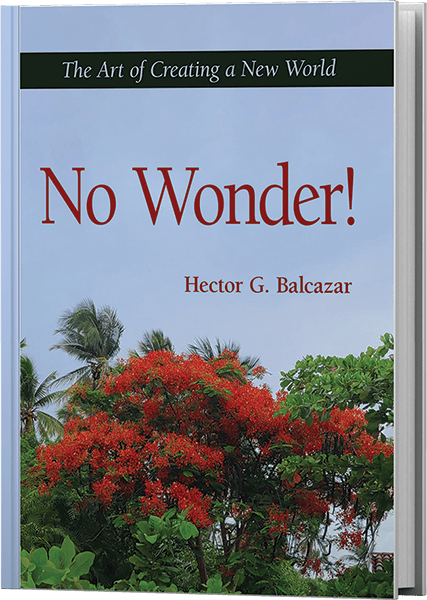
No Wonder! – The Art of Creating a New World is a memoir.
Throughout this storytelling narrative, the reader will be taken on a journey that is full of adventures and rich in serendipity. The author takes the reader on a journey through his academic experience in five US states and six universities.
The book has three sections.
Part 1 begins with the immigrant experience of the author’s family. Part 1 covers the author’s early years, growing up in Mexico City, including his college experience, and later his International Nutrition studies at Cornell University in Ithaca, New York. In Part 1, the author shares his entry into his academic career where he discovers his passion for public health. He writes about his road to public health to seek a philosophy of scholarship bridging science with human justice.
Part 2 focuses on the author’s work with community health workers. In Part 2, the author sets the stage and explains ways to transform communities and to bring health justice.
Finally, in Part 3, the author presents a new vision with a new actor: the community spiritual worker.
The book is a vibrant and colorful tapestry, full of inspirational real-life stories, cultural foods, poems, songs, and many accounts of the author’s rich life experience, living in two cultures, Mexico and the US, and working in various universities.
The author sheds light on the people who have been in the shadows and who have been invisible within communities.
The book emphasizes that working with communities is an art.
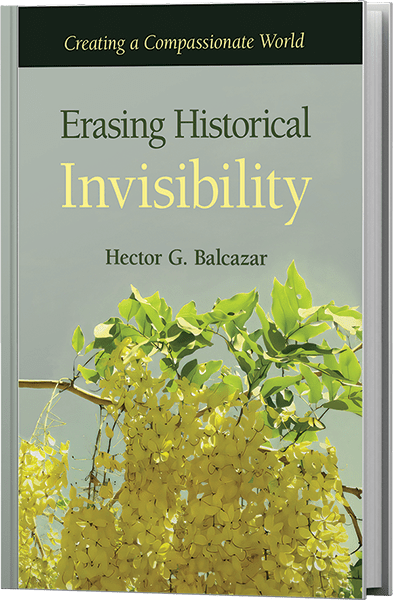
Hector G. Balcazar’s first book, No Wonder! The Art of Creating a New World started a new dialogue for building a more hopeful future in which humanity cares for one another’s wellbeing using the Community Health Worker model.
In that first book, which took the form of a memoir, the author uses his work in public health to present his vision to build communities utilizing a bridge of human connection.
Utilizing a storytelling approach, Erasing Historical Invisibility: Creating a Compassionate World further elevates the concept of humanity caring for one another and building a more hopeful future. With themes such as erasing historical invisibility and creating a compassionate world, the author examines the story of our past and presents a positive framework for the future.
With Erasing Historical Invisibility, the author takes a historical perspective as to why humanity has not yet advanced to increase the human spirit. He suggests humanity has utilized an “old recipe” which distracts the collective maturity from evolving. The reader is invited to learn about the “old recipe,” the role of human invisibility, and what “new recipes” are needed.
In Erasing Historical Invisibility, the author describes humanity as a conqueror species and how humanity evolved to create human invisibility. Using the Roman Empire, Mexico, and the United States as examples, the author presents the need for dismantling the “old recipe.”
Showcasing themes such as re-examining our human collective experience, moving towards regional and community life, and the concept of “antidotes” to build new model frameworks for creating a collective maturity and a safe world.

What if healing the world requires more than new policies or better technology—and instead calls for a new understanding of what it means to be human?
Forging Ahead with Wonder is the third and culminating volume of Hector G. Balcazar’s visionary trilogy, inviting readers into a luminous universe where humanity is gently guided beyond fear, domination, and separation toward a deeper remembrance of its shared essence.
From the shores of Mexico’s Pacific coast to the radiant world of Planet Solo in the Pleiades, Earth is welcomed into a broader family of learning civilizations devoted not only to planetary stewardship, but to the healing of the human spirit itself.
Guided by Eto, a circle of Solo companions, and the luminous AI presence Aion, the novel imagines a compassionate architecture for human civilization—one where education is sacred, governance is humane, and communities function as living ecosystems of belonging. Through imaginative world-building, soulful dialogue, and visionary frameworks, readers are invited to consider what it might mean for humanity to finally grow into its wiser self.
Ultimately, Forging Ahead with Wonder is not a story about leaving Earth behind, but about healing those who live upon it. It offers a bold and tender manifesto for a compassionate humanity that understands caring for one another is inseparable from caring for the planet we call home.
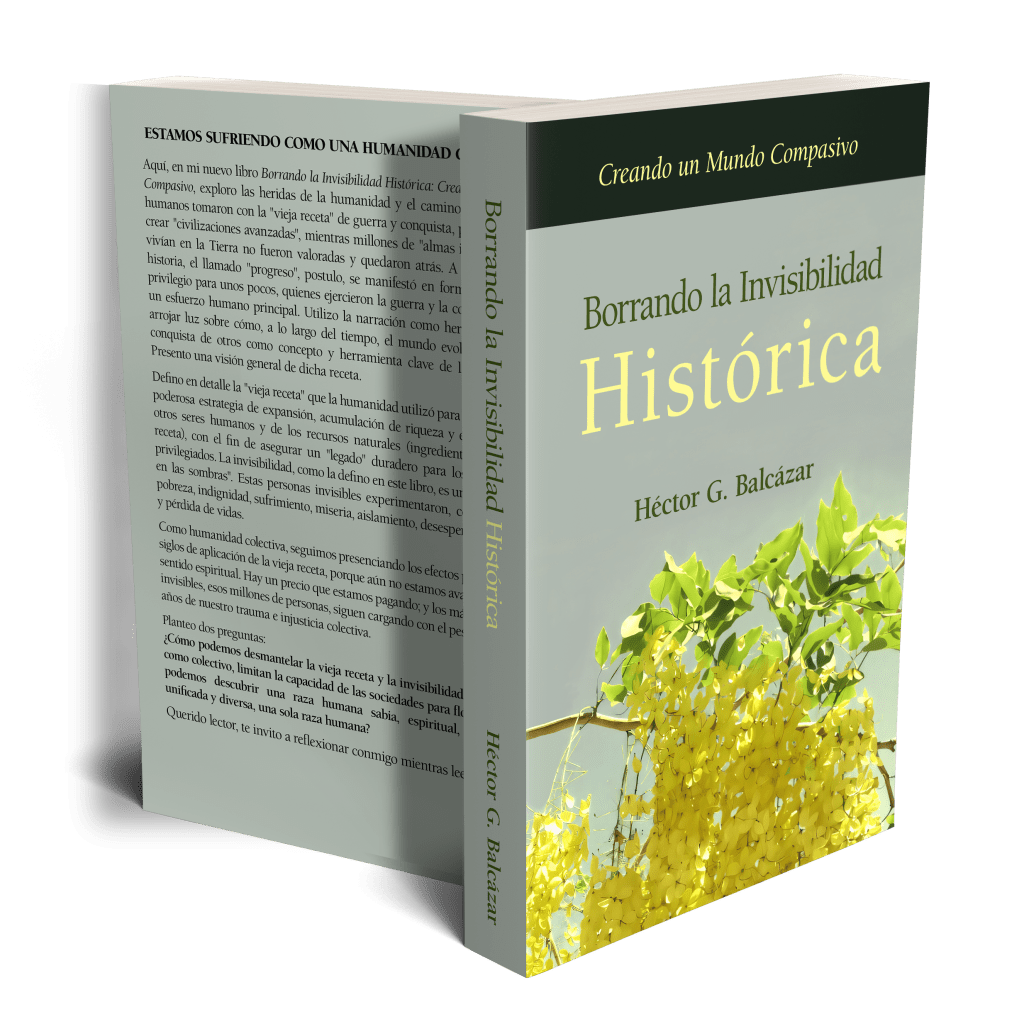
SPANISH VERSIONS

 Hector Balcazar